How Box Breathing Trains the Nervous System (Even for Kids)
Introduction
Anxiety can feel like it’s taking over—from racing thoughts to sweaty palms to a mind stuck on a loop. However, what if you could use your breath alone to calm the storm? In order to activate the nervous system and promote relaxation during stressful situations, box breathing, often referred to as square breathing, employs a four-step cycle: inhale, hold, exhale, hold. According to new research, box breathing physically rewires stress responses. This article examines the advantages for both adults and kids. We’ll examine why it’s a fundamental ability for daily mental health, how to teach it, and why it works.
How the Nervous System Responds to Breath
Sympathetic (fight-flight) and parasympathetic (rest-digest) are the two primary branches of the autonomic nervous system (ANS). Through the vagus nerve, breath has a direct connection to the parasympathetic nervous system.
Rhythmic, slow breathing—as seen in controlled techniques—stimulates the vagus nerve, increases heart-rate variability (HRV), and shifts the body from stress to calm (Gerritsen & Band, 2018). A meta‑analysis confirms slow-paced breathing significantly raises HRV and improves mood, decision‑making, and stress resilience (Shao et al., 2024; Balban et al., 2023).
Box breathing is a straightforward, structured approach that uses an equal count cycle to produce these physiological benefits. Its simplicity and clarity make it useful in a variety of contexts, including households, workplaces, and schools.
Why Box Breathing Works: The Science
1. Enhanced Vagal Tone
Vagal tone indicates the strength and resilience of the parasympathetic system. Gerritsen and Band’s Respiratory Vagal Stimulation model shows how long exhalations trigger parasympathetic dominance—reducing arousal and stress (Gerritsen & Band, 2018).
2. Boosted HRV & Emotional Control
Studies show slow-paced breathing—like box breathing—significantly increases HRV and calmness. A recent clinical experiment documented immediate HRV gains and reduced anxiety after just minutes of practice (Fincham et al., 2023).
3. Balanced Brainwave States
Neurophysiological research also shows that rhythmic breathing increases alpha brain waves (relaxation) and decreases beta waves (stress), while activating the prefrontal cortex (attention, executive control) and dampening amygdala activity (emotion/fear response) (News-Medical, 2025).
Teaching Box Breathing to Children
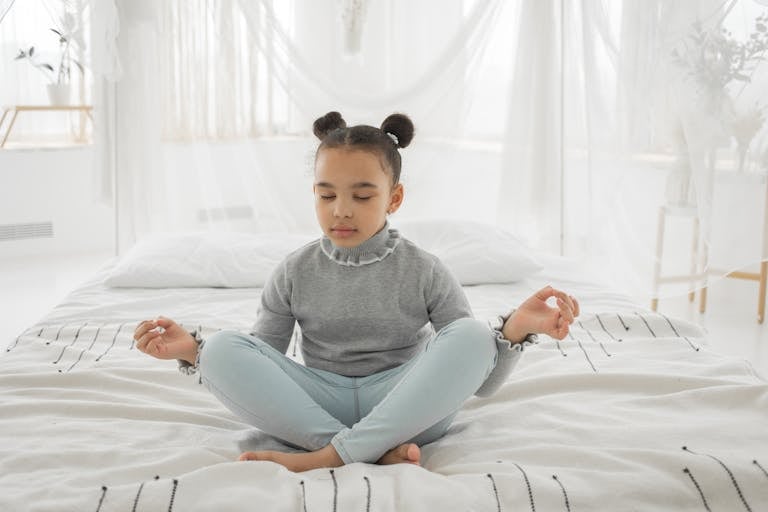
Teaching box breathing to kids is both feasible and impactful. One study with 585 children aged 7–12 found that slow‑paced breathing sessions with biofeedback significantly reduced anxiety and stress, and improved HRV (Vallejo, 2025).
Simple Steps for Kids
- Breathe in for 4 seconds.
- Pause for 4.
- Breathe out for 4.
- Pause again for 4.
- Repeat 4–6 times or for 2 minutes.
Use tools: drawing squares, placing fingers on the breath, or using toys on the belly to visualize motion (The Pediatrician Mom, 2023; WellGood, 2025). These playful additions anchor the cues and make it fun.
Age-Specific Notes
- Under 8: Use simplified counts like 3‑or‑2 second cycles.
- 8–12: Full 4‑count breaths. Use visuals like a drawn square.
- Teens: Teach self-application during school stress or before presentations.
Studies show higher vagal tone in children correlates with emotional regulation and social resilience (Miller et al., 2014).
Integrating Box Breathing into Everyday Life
For Adults
- Morning routine: 4 cycles (2 minutes) to start the day calm.
- Work breaks: 2 cycles between meetings.
- Evening ritual: 6–8 cycles before bed to wind down.
For Children
- Before school to ease separation anxiety.
- Before homework to enhance focus.
- Bedtime routine to support restful sleep.
With repeated practice, it becomes an automatic self-regulation tool—something your nervous system knows how to do independently.
Real-World Benefits Backed by Data
- Stress reduction: Meta-analyses confirm breathwork—especially with slow patterns—reduces stress (g ≈ –0.35) and anxiety (g ≈ –0.32).
- Improved decision-making: Just two minutes of long‑exhale breathing improved decision accuracy and lowered stress in a lab test (De Couck et al., 2019).
- Child resilience: Regular breathing with biofeedback improved HRV and reduced emotional symptoms even in regular school settings (Vallejo, 2025).
Step-by-Step Guide
| Step | What to Do |
| 1 | Sit or lie comfortably. Relax your shoulders. |
| 2 | Inhale for 4 seconds. |
| 3 | Hold for 4 seconds. |
| 4 | Exhale for 4 seconds. |
| 5 | Hold for 4 seconds. |
| 6 | Repeat for 4–8 cycles (1–3 minutes). |
| 7 | Practice daily and during stress—Make it a go-to tool. |
Encourage children to use visual tools—drawing boxes in the air, tracing a finger, or placing toys to feel breath movement.
Understanding the Topic
Box breathing is effective because it activates our autonomic nervous system, which is where stress resides in our bodies. With regular practice, it balances brainwaves, raises HRV, activates the vagus nerve, and creates neuroplastic changes. It’s a gateway to rewiring the stress response, not just a technique. These advantages also apply to kids, according to recent research, so it’s a skill for thriving rather than merely a coping mechanism.
Conclusion
Box breathing is a scientifically supported technique for physically retraining your nervous system, not just a relaxation technique. Whether in classrooms or living rooms, its equal‑count 4‑step rhythm taps into the vagus nerve and empowers us to reshape stress responses. This approach promotes emotional resilience, calm focus, and improved mental health in both children and adults. Box breathing is an effective addition to any mental health toolkit since it is easy to use, accessible, and supported by research.
References
Balban, M. Y., Neri, E., Kogon, M. M., et al. (2023). Brief breath practices for mood and arousal. Cell Reports Medicine.PMC
De Couck, M., et al. (2019). Effects of breathing patterns on HRV and decision-making. International Journal of Psychophysiology. Psychology Today
Fincham, G. W., Strauss, C., Montero-Marin, J., & Cavanagh, K. (2023). Effect of breathwork on stress and mental health: A meta-analysis of randomized-controlled trials. Scientific Reports, 13, 432. Nature
Gerritsen, R. J. S., & Band, G. P. H. (2018). Breath of life: The respiratory vagal stimulation model of contemplative activity. Frontiers in Human Neuroscience. PMC+1Psychology Today+1
Miller, J. G., et al. (2014). Moderate baseline vagal tone predicts social behavior in children. Developmental Psychobiology. apa.org
Shao, R., Man, I. S. C., & Lee, T. M. C. (2024). The effect of slow-paced breathing on cardiovascular and emotion functions: A meta-analysis. Mindfulness, 15. ScienceDirectNature
Vallejo, M. (2025, June 5). Research on breathing techniques to reduce anxiety and stress in elementary school students. International Journal of Environmental Research and Public Health. Mental Health Center Kids
WellGood. (2025, April 9). The #1 technique for children during moments of panic or anxiety. WellGood. The Calmness Crew
The Pediatrician Mom. (2023, July 25). Easy tool to calm an overwhelmed child. ThePediatricianMom.com. THE PEDIATRICIAN MOM
News‑Medical. (2025, April 28). The science behind breathwork and stress reduction. Medical News Today
Medical News Today. (2024, May 13). Box breathing: How to do it, benefits, and tips. YouTube+7Medical News Today+7Mental Health Center Kids+7