Co-Regulation vs. Self-Regulation: Why Kids Can’t Calm Down Alone (And What Parents Can Do)
Introduction
Kids don’t come wired to “self-soothe” on command. They grow into it. Young children rely on adults to help down-regulate big feelings — a process called co-regulation. Over time, those external supports become internal skills (self-regulation). That shift is central to healthy emotional development and long-term mental health. This article explains the science behind co-regulation and self-regulation, why co-regulation matters more than you might think and 7 practical steps parents and carers can use right away.

What do we mean by co-regulation and self-regulation?
- Co-regulation is the moment-to-moment process where a caregiver (or safe adult) helps a child manage physiological arousal and emotion — through voice tone, touch, facial expression, structure and soothing routines. Think: a calm hug, a steady voice, a predictable bedtime ritual.
- Self-regulation is what the child develops after repeated co-regulation episodes: the ability to calm down, shift attention, plan actions and manage impulses — without immediate help.
Co-regulation is the training ground. Self-regulation is the result of good training.
Why co-regulation comes first: the biology of calming
Babies and young children have immature prefrontal brains — the parts that later help with planning and inhibiting impulses. Instead, their nervous systems rely heavily on automatic regulation.
Polyvagal theory explains this beautifully: the social-engagement system (facial expression, voice, eye contact) helps shift kids out of alarm and into calm states where learning is possible (Porges, 2022). When a caregiver offers a soft voice, safe touch and consistent rhythm, the child’s physiology down-regulates: heart rate slows, breathing steadies and attention becomes available for learning. That’s co-regulation in action.
The evidence: co-regulation shapes self-regulation (and mental health)
Multiple studies and reviews show that co-regulation predicts later self-regulation, social skills, and emotional wellbeing:
- Observational research shows that dyadic patterns of caregiver–child interaction (contingency, flexibility, warm responsiveness) predict improvements in children’s self-control and emotion management over time. Simply put: sensitive co-regulation → better self-regulation.
- Systematic and intervention reviews indicate that emotion-coaching (a co-regulatory parenting approach) improves children’s emotional competence, behaviour and resilience (Hurrell, 2016; England-Mason, 2023). Parents who validate feelings and teach coping strategies raise kids who cope better.
- Parent emotion-regulation matters too. Meta-analytic work shows that caregivers’ capacity to regulate their own emotions strongly links to children’s adjustment and mental health outcomes. Calm parents co-regulate better, which buffers kids from anxiety and behaviour problems.
In short: co-regulation isn’t optional training — it’s foundational.
What co-regulation looks like in real life (concrete examples)
Here are everyday co-regulation moves proven by research and practice to help:
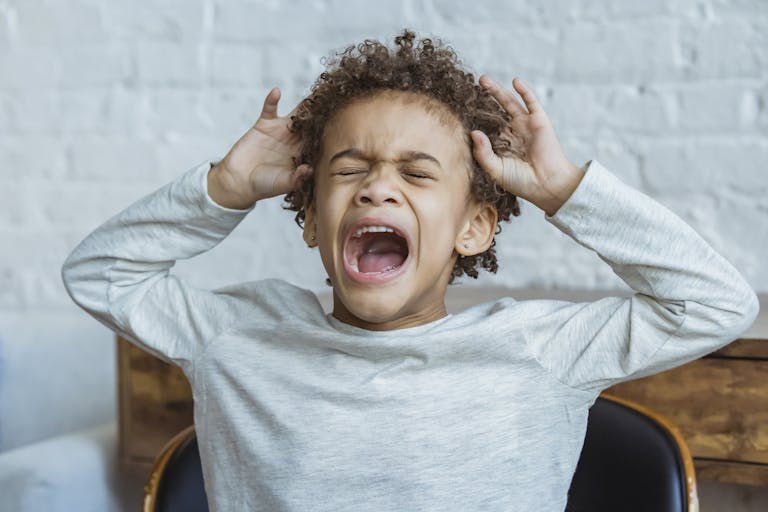
- Soothing voice and slowed breathing. When a child is explosive, a calm caregiver voice and slow breaths help the child’s physiology follow. (Polyvagal insights.)
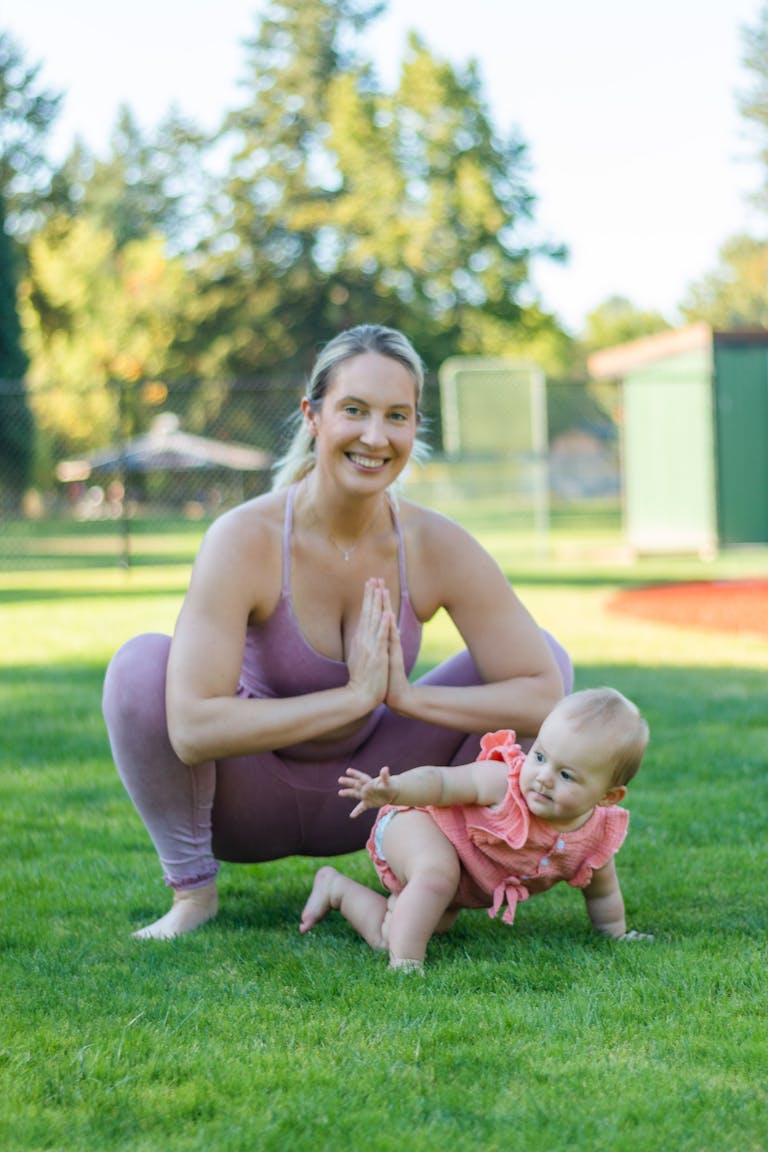
- Physical presence and safe touch. Hugs, holding, or simply steady proximity signal safety and reduce alarm in young children.
- Labeling emotions (emotion coaching). “I see you’re angry — that’s frustrating.” Naming feelings helps children make sense of arousal and begin to manage it. Studies link this parenting style to better emotional outcomes.
- Structure and predictable routines. Predictability reduces surprise and helps children plan and self-soothe (bedtime routines are a classic example).
- Modeling calm problem-solving. Adults who show how they cope teach kids by example — how to pause, breathe and choose the next step.
All of these are co-regulation in micro-dose form. Repeated thousands of times, they become internalised skills.
Common myths — and the reality
Myth 1: “If I soothe my child, I’ll make them dependent.”
Reality: Soothing teaches the nervous system that the world is safe. Dependence comes from inconsistent or intrusive help — not from sensitive co-regulation.
Myth 2: “Kids should just learn to calm down on their own.”
Reality: Self-regulation grows from co-regulation. Expecting young children to self-soothe without support is developmentally unrealistic and stressful.
7 Simple, research-backed steps parents can use today
Use these small, practical strategies. They work with toddlers and preschoolers and build lifelong skills.
1. Notice the physiology.
Instead of reacting to behaviour, name the body signs: “I can see your fists are tight.” This helps slow the cascade. (Labeling reduces arousal.)
2. Make a short regulatory ritual.
Two minutes of breathing, a quiet song, or a predictable cuddle after falling apart helps rebuild calm. Rituals make regulation learnable.
3. Label first, problem-solve later.
During calm windows, practise naming emotions and ideas for coping. Save consequences and teaching for when both of you are regulated. (Emotion coaching steps.)
4. Model your own regulation.
If you feel triggered, use a short script: “I’m feeling hot. I’m going to breathe for 60 seconds and then help.” Children learn from disciplined calm.
5. Build predictable routines.
Bed, snack, and quiet play routines cut down surprises and reduce daily dysregulation.
6. Teach micro-skills.
Practice taking five deep breaths together, squeezing a hand ball, or naming three things you can see to ground attention.
7. Seek coaching if you’re overwhelmed.
Parent training (emotion-coaching programmes) and family therapy increase caregivers’ skills and reduce child behaviour problems. Intervention evidence supports meaningful change.
What teachers and early-years settings can do
Co-regulation isn’t just for parents. Educators and childcare staff are powerful co-regulators:
- Use calm entry rituals when children arrive.
- Create quiet corners with sensory supports (weighted blanket, soft lighting).
- Train staff in emotion-coaching and co-regulatory techniques.
- Build predictable transitions between activities (visual timers, songs).
Research shows that classroom co-regulation practices improve attention and classroom behaviour when used consistently.
Understanding the topic
Co-regulation and self-regulation sit on a spectrum: one grows into the other. That process unfolds over years and across interactions. Neuroscience (polyvagal ideas) explains the physiological route — caregivers provide safety cues that down-regulate emotion systems. Developmental research shows that those repeated safety experiences are the bricks of self-control. Intervention studies confirm it’s not just theory: teaching parents to co-regulate works. So, if we want children with better emotional health and fewer anxiety or behaviour problems, we must start by supporting the people who do the co-regulating.
Conclusion
Kids can’t calm down alone at first — and that’s okay. Co-regulation is how the nervous system learns safety. When caregivers show consistent calm, name feelings and provide predictable routines, children internalise those calming patterns and develop self-regulation. The payoff is huge: better attention, fewer meltdowns, stronger relationships, and improved mental health over time.
Start small. Notice the body. Breathe with your child. Name the feeling. Repeat. Over time, the external helps become the internal skill.
References
Buhler-Wassmann, A. C., et al. (2021). Studying caregiver-infant co-regulation in dynamic, diverse contexts. Developmental Review, 60, 100921. ScienceDirect
England-Mason, G. (2023). Emotion socialization parenting interventions targeting child outcomes: A review. Clinical Child and Family Psychology Review. ScienceDirect
Hurrell, K. E. (2016). Parental meta-emotion philosophy and emotion coaching in parenting: Review and practice implications. Emotion Review/Journal of Parenting Research. PMC
Lobo, F. M., et al. (2020). Understanding the parent–child coregulation patterns shaping child self-regulation. Developmental Psychology, 56(8), 1503–1518. PMC
Paley, B., et al. (2022). Conceptualizing emotion regulation and coregulation as family-level processes. Family Process, 61(1), 3–17. PMC
Porges, S. W. (2022). Polyvagal theory: A science of safety. Frontiers in Integrative Neuroscience, 16, Article 871227. Frontiers
Schachter, R. E., et al. (2025). A meta-analysis of early childhood coaching interventions (overview). Early Childhood Research Quarterly. ScienceDirect
Wilson, B. J. (2014). Parental emotion coaching and child self-regulation: Associations with behaviour. Early Childhood Research, 20(3), 214–228. PMC
Zahl-Olsen, R., et al. (2023). Effects of emotionally oriented parental interventions: A systematic review. Journal of Child and Family Studies, 32(5), 1201–1217.