
Box Breathing for Anxiety: The Scientific Benefits Explained
Introduction
Anxiety usually comes on suddenly and without notice. Sweaty palms, a rapid heartbeat, and racing thoughts. When your body takes over before your head can catch up, you may feel helpless. However, the breath provides a strong anchor. A straightforward yet powerful method is box breathing, also known as square breathing: inhale, hold, exhale, hold—for equal counts. This technique, which has its roots in Navy SEAL procedures, soothes the nervous system and provides instant comfort. Studies reveal that even short sessions can change brain function, calm anxiety, and control heartbeat. This article explores the science underlying box breathing, its principles, and practical applications.

What Is Box Breathing?
Box breathing involves:
- Inhaling slowly for a count (usually four),
- Holding the breath for the same count,
- Exhaling fully for that count,
- Holding again before repeating.
This creates a rhythmic cycle of control. Unlike uncontrolled breathing (rapid, shallow inhales with quick exhales), box breathing invites the parasympathetic nervous system to take the lead. It’s like sending a direct signal to your brain saying, “It’s okay. Slow down.”
Why Controlled Breath Regulates the Brain & Body
Emotion and breath are connected by deep neurological circuits. Box breathing improves physiological and psychological regulation by increasing vagal tone (Gerritsen & Band, 2018; Yehuda et al., 2024). Higher heart-rate variability (HRV), an accurate measure of resilience, is correlated with stronger vagal tone. One session of deep, slow breathing increased HRV and decreased anxiety in participants of all ages, according to a clinical trial (Magnon et al., 2021). Controlled breathing restores balance, as evidenced by the study’s findings of lower state anxiety and increased HF power.
What Does the Research Say?
Mood and Anxiety Improvement
A meta-analysis found that breathwork—including box breathing—produces significant reductions in stress (g = −0.35), anxiety (g = −0.32), and depressive symptoms (g = −0.40) across trials with over 785 participants (Fincham et al., 2023). Importantly, these benefits were consistent in non-clinical samples, meaning anyone can experience them.
Yilmaz Balban and colleagues (2023) further compared breathwork to mindfulness meditation in an RCT. Both practices reduced negative emotion, but breathwork—especially techniques with extended exhalations like box breathing—had greater reductions in respiratory rate and mood improvement (Yehuda et al., 2024).
Physiological Calming
Breath-based practices trigger measurable physiological changes. A meta-analysis covering 1,133 participants found slow-paced breathing significantly reduced systolic blood pressure, lowered heart rate, and increased HRV measures such as RMSSD and SDNN (Shao et al., 2024). The emotional benefits directly mirrored these physiological changes, reinforcing how integrated our systems are.
Neurophysiological research also shows that rhythmic breathing increases alpha brain waves (relaxation) and decreases beta waves (stress), while activating the prefrontal cortex (attention, executive control) and dampening amygdala activity (emotion/fear response) (News-Medical, 2025).
Box Breathing vs Other Techniques
There are numerous breathing techniques, some of which use different inhale-to-exhale ratios, while others only concentrate on slowing exhalation. Because of its symmetry and simplicity, box breathing is particularly accessible to beginners and simple to replicate under pressure. To stay focused under extreme pressure, Navy SEALs employ a 4–4–4–4 protocol during stressful operations (Healthline, 2025). The equal-count pattern maximises vagal involvement and emotional calmness by promoting balanced breathing.
How to Practice Box Breathing
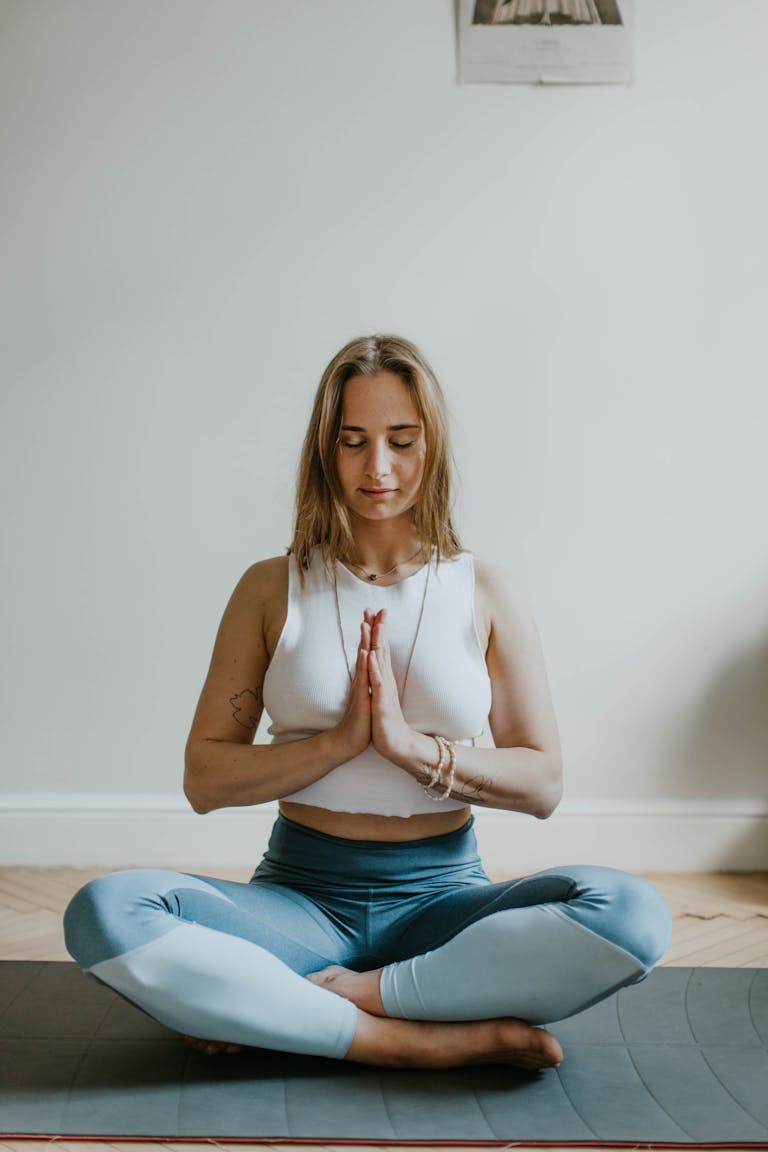
- Find a calm spot and sit upright.
- Exhale all the air from your lungs.
- Inhale slowly for 4 beats.
- Hold for 4 beats.
- Exhale for 4.
- Hold again for 4.
- Repeat for 4–6 cycles (≈2–3 minutes).
You can adjust counts (e.g., 4–6–4–6) to match your comfort, but equal counts offer clarity and ease. Practice daily—first thing in the morning, during breaks, or before bed. Apps or visuals can help count until it becomes automatic.
Real-Life Applications
Before a Presentation
Focused breathing primes your mind, slows your heart, and centers your attention.
Midday Reset
Use a short breathing session to interrupt stress buildup and prevent fatigue.
Evening Transition
Practice this before bed to quiet the mind and signal restful state.
For Children
Teach simple box breathing (even shorter counts) to help kids manage emotions and self-regulate.
Box Breathing: Step-by-Step Routine
| Time | Setting | Routine |
| Morning | In bed or chair | 4 cycles before starting the day |
| Pre-meeting | Desk or hallway | 2 cycles to steady nerves |
| Afternoon lull | Break area | 4 cycles to restore clarity |
| Evening wind-down | Bedroom | 6 cycles before lights out |
Consistency isn’t critical long-term; repetition is. Performing box breathing when calm primes the nervous system for easier use when anxious.
Understanding the Topic
Anxiety is embodied rather than just mental. Prior to conscious awarness, our nervous system reacts to imagined or actual threats. This system is accessed through box breathing, which provides a physiological pathway to relaxation. In contrast to therapy, this approach gives you a tool right away to deal with anxiety spikes. And like any muscle, the nervous system develops stronger with constant workout. Every session increases resilience, which facilitates coping with challenges in the future.
Conclusion
Box breathing offers a scientifically supported tool to ease anxiety, regulate the nervous system, and build emotional resilience. It is a valuable addition to your mental health toolkit because it is easy to use, safe, and grounded in both modern science and traditional practice. Take a deep breath. Give your intellect more strength. On your path to better health, make box breathing your everyday ally.
References
Fincham, G. W., Strauss, C., Montero-Marin, J., & Cavanagh, K. (2023). Effect of breathwork on stress and mental health: A meta-analysis of randomized-controlled trials. Scientific Reports. https://doi.org/10.1038/s41598-022-27247-y
Gerritsen, R. J. S., & Band, G. P. H. (2018). Breath of life: The respiratory vagal stimulation model. Frontiers in Human Neuroscience.
Healthline. (2025, February 4). Box breathing: How to, benefits, and tips. Healthline.
Magnon, V., Dutheil, F., & Vallet, G. T. (2021). Benefits from one session of deep and slow breathing on vagal tone and anxiety in young and older adults. Scientific Reports, 11, 19267. https://doi.org/10.1038/s41598-021-98736-9
News-Medical. (2025, April 28). The science behind breathwork and stress reduction. News-Medical.
Shao, R., Man, I. S. C., & Lee, T. M. C. (2024). The effect of slow-paced breathing on cardiovascular and emotion functions: A meta-analysis and systematic review. Mindfulness, 15, 1–18. https://doi.org/10.1007/s12671-023-02294-2
Yehuda, B., Balban, M. Y., Kogon, M. M., et al. (2024). Comparative RCT of breathwork vs mindfulness meditation: mood, anxiety, and physiology. Cell Reports Medicine.