
Lifestyle Medicine for Stress: Sleep, Diet & Movement Together
Introduction
Stress wears many faces. Some days it’s a low-grade hum. Other times it’s a tight chest, poor sleep, or a mind that won’t switch off. Medical approaches are important, but there’s also powerful evidence that lifestyle medicine — the combined, intentional use of sleep hygiene, sound nutrition, and regular movement — can substantially protect and restore mental health.
This is not platitude. Over the last decade, randomized trials and meta-analyses have shown that improving sleep, enhancing diet quality, and moving regularly can reduce symptoms of anxiety and depression, improve resilience, and lower physiological stress markers. Best of all: these behaviours interact synergistically. When you fix one, the others often get easier. Let’s look at the evidence, the mechanisms, and practical ways to put lifestyle medicine to work for stress and mental health.

Why combine sleep, diet and movement?
Many studies treat sleep, diet and exercise separately. That’s useful. But human lives are integrated: poor sleep makes healthy eating harder; poor diet impairs sleep; inactivity deepens low mood. Recent reviews therefore emphasise multicomponent interventions — programs that target several behaviours at once — because they reflect real life and often produce larger mental-health gains (Merlo et al., 2021; Mohseni et al., 2022).
A clear rationale emerges:
- Sleep restores brain function and regulates stress hormones.
- Diet supplies the nutrients the brain needs to make neurotransmitters and to temper inflammation.
- Movement modifies mood via endorphins, neurogenesis, improved sleep and reduced inflammation.
When combined, these three act like supportive pillars: together they stabilise mood, increase energy, and strengthen coping. That’s lifestyle medicine in action.
The evidence: what recent studies say
Physical activity: a powerful, well-replicated tool
A large body of evidence links physical activity to lower risk of depression and anxiety. Meta-analyses and systematic reviews show that even modest increases in activity are associated with substantially reduced risk of depressive symptoms (Pearce et al., 2022; Noetel et al., 2024). More recent umbrella reviews and meta-analyses consistently find exercise is effective as a preventive and therapeutic strategy for depression (Noetel et al., 2024; White et al., 2024).
Practical takeaways: you don’t need elite workouts. Moderate consistent movement — brisk walking, cycling, strength work, or mindful movement such as yoga — reliably supports mood and stress regulation.
Diet: food as a mental-health medicine
Nutrition matters to the brain. The SMILES randomized controlled trial (Jacka et al., 2017) was a breakthrough: people with major depression who received a prescriptive “healthy” dietary intervention (a modified Mediterranean diet) experienced clinically meaningful reductions in depressive symptoms compared with a social support control. Subsequent trials (e.g., HELFIMED) replicated benefits, and larger epidemiological studies show that higher diet quality is associated with lower risk of depression (Parletta et al., 2019; Opie et al., 2018).
Mechanisms include nutrient supply for neurotransmitters, reductions in inflammation, improved gut microbiome composition, and better metabolic health — all of which influence stress reactivity and mood.
Sleep: the cornerstone of self-regulation
Sleep has outsized effects on emotion regulation, cognition, and stress physiology. Cognitive behavioural therapy for insomnia (CBT-I) and digital CBT-I show strong effects on sleep and secondary benefits for anxiety and depression (Hertenstein et al., 2022; van Straten et al., 2017). Poor sleep worsens HPA-axis activation and inflammatory signaling — pathways known to fuel mood disorders. Improving sleep reduces irritability, sharpens thinking, and increases resilience to daily stressors.
Multicomponent and lifestyle medicine interventions
What happens when you combine these elements? Multicomponent programs — which include diet, exercise, sleep hygiene and sometimes behavioural coaching or psychological skills — show promising results. Mohseni et al. (2022) reported improvements in both physical and mental health after a 1.5-year multidisciplinary lifestyle program. Emerging RCTs of digitally delivered lifestyle medicine (smartphone programs combining diet, movement and sleep modules) show mental-health benefits among stressed populations (Wong et al., 2024).
The key message: integrated lifestyle changes produce additive and sometimes synergistic improvements in mental health compared to single-component interventions.
How these behaviours change stress biology
Lifestyle medicine reduces stress through several converging mechanisms:
- Lowering physiological arousal. Regular exercise and better sleep increase heart-rate variability (HRV), a marker of parasympathetic (rest-and-digest) regulation (White et al., 2024).
- Reducing inflammation. Poor diet, inactivity and sleep loss raise systemic inflammation; healthier diets (e.g., Mediterranean style) and movement lower proinflammatory cytokines linked to depression.
- Supporting neuroplasticity. Exercise drives neurogenesis and BDNF (brain-derived neurotrophic factor), improving mood and cognition.
- Improving metabolic health. Better diet and movement improve insulin sensitivity and energy balance, which stabilises mood swings.
- Enhancing self-efficacy and behavioural activation. Achieving lifestyle goals improves confidence, counters avoidance, and breaks cycles of rumination.
These biological and psychological changes create a more resilient baseline for handling life’s stressors.
Practical, evidence-based plan: how to use lifestyle medicine for stress
Below is a practical program you can recommend to readers or adopt yourself. It’s realistic, scalable, and grounded in evidence.
Sleep: stabilise the foundation
- Aim for consistent sleep timing. Go to bed and rise within a 30- to 60-minute window daily.
- Prioritise 7–9 hours (individual needs vary).
- Use CBT-I principles: stimulus control (bed for sleep/sex only), reduce evening screens, and keep a wind-down routine. Digital CBT-I programs work when in-person therapy isn’t available (Hertenstein et al., 2022).
Diet: nutrient-dense, anti-inflammatory patterns
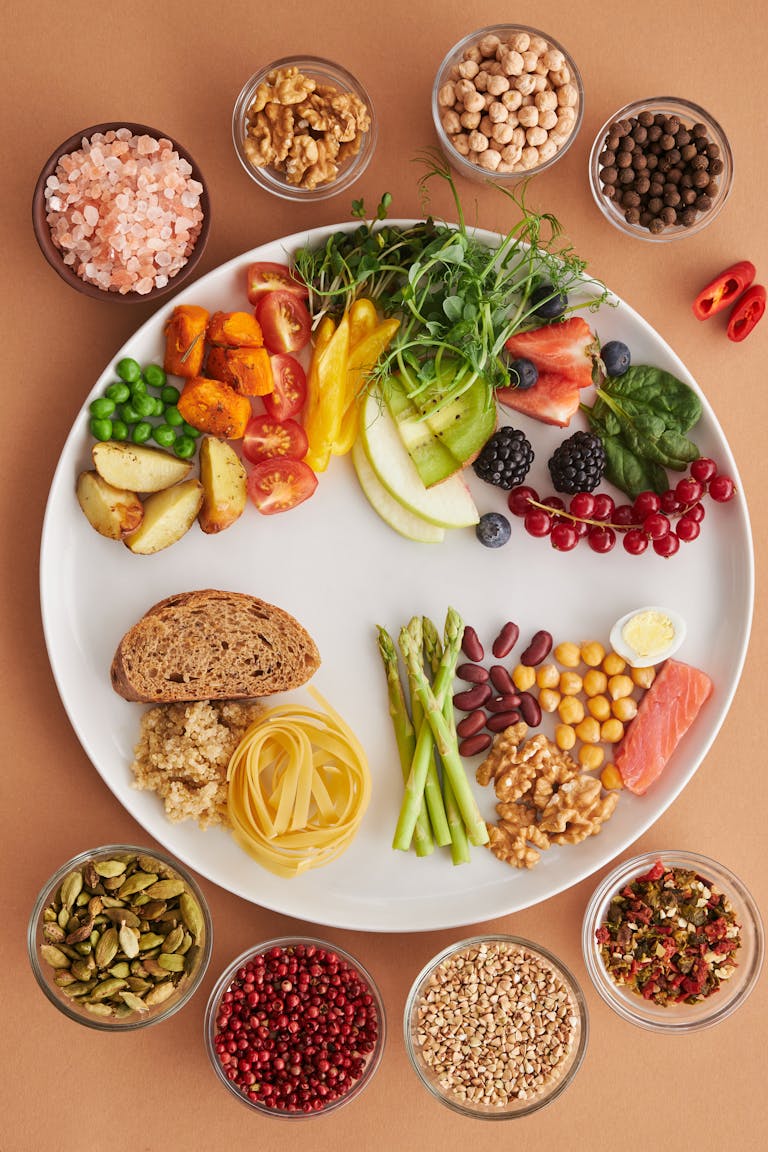
- Emphasize a Mediterranean-style pattern: vegetables, fruits, whole grains, legumes, fish, nuts, olive oil.
- Reduce ultra-processed foods and refined sugar that spike inflammation and mood swings.
- If depression or persistent low mood is present, consider referral to a dietitian; trials like SMILES used dietitian-led interventions (Jacka et al., 2017).
Movement: move in ways you can sustain
- Target at least 150 minutes of moderate aerobic activity per week, plus two sessions of resistance work — but start lower if needed.
- Include daily walk breaks, movement rituals, or short high-impact bouts. Even small increases in steps are associated with mood benefits (Pearce et al., 2022).
- Add mindful movement (yoga, tai chi) if stress or anxiety feels high — these blend physical and parasympathetic benefits.
Combine and sequence for best effect
- Do movement earlier in the day to support sleep at night.
- Use activity to break rumination cycles (walk when stuck in negative thinking).
- Pair nutrition changes with sleep hygiene: stabilised blood sugar reduces night waking.
- Start small and build: small wins generate momentum and self-efficacy.
Understanding the Topic
At its heart, lifestyle medicine reframes mental health: you are not just a brain that needs pills or talk only. You are a whole person whose body, habits and environment shape mood. Sleep, diet and movement influence overlapping biological systems — HPA axis, inflammatory cascades, autonomic tone — and they influence behaviour, cognition, and identity too. The real power is when these levers are used together. Improvements in one domain ripple into the others. That’s how sustainable change happens.
Conclusion
Lifestyle medicine is not a trendy add-on. It is an evidence-informed way to reduce stress and protect mental health. Sleep stabilises emotion, diet feeds neural resilience, and movement rewires stress systems — and together they create lasting change. For clinicians, integrating these strategies into care plans matters. For individuals, small, realistic steps add up.
If you want to start today: pick one small sleep habit, one dietary swap, and one movement goal. Track progress for two weeks. Then build. Your brain, body and mood will thank you.
References
Jacka, F. N., O’Neil, A., Opie, R., Itsiopoulos, C., Cotton, S., Mohebbi, M., … & Berk, M. (2017). A randomised controlled trial of dietary improvement for adults with major depression (the SMILES trial). BMC Medicine, 15(1), 23. https://doi.org/10.1186/s12916-017-0791-y
Merlo, G., et al. (2021). Mental Health in Lifestyle Medicine: A Call to Action. International Journal of Environmental Research and Public Health. https://www.ncbi.nlm.nih.gov/pmc/articles/PMC8848112/
Mohseni, M., et al. (2022). Improved physical and mental health after a combined lifestyle intervention: 1.5-year follow-up. Frontiers in Public Health. https://www.ncbi.nlm.nih.gov/pmc/articles/PMC10082324/
Noetel, M., et al. (2024). Exercise for depression: systematic review and meta-analysis. BMJ. https://doi.org/10.1136/bmj-2023-075847
Pearce, M., et al. (2022). Association between physical activity and risk of depression: systematic review and meta-analysis. JAMA Psychiatry. https://pubmed.ncbi.nlm.nih.gov/35416941/
Parletta, N., Zarnowiecki, D., Cho, J., et al. (2019). A Mediterranean-style dietary intervention supplemented with fish oil improves diet quality and mental health in people with depression (HELFIMED). Nutritional Neuroscience, 22(7), 474–487. https://doi.org/10.1080/1028415X.2018.1462336
Hertenstein, E., et al. (2022). Cognitive behavioral therapy for insomnia in patients with comorbid mental disorders: A systematic review and meta-analysis. Journal of Clinical Sleep Medicine. https://pubmed.ncbi.nlm.nih.gov/35240417/
White, R. L., et al. (2024). Physical activity and mental health: a meta-review of lifestyle psychiatry evidence. BJPsych Open / Frontiers in Psychiatry (meta-review). https://www.ncbi.nlm.nih.gov/pmc/articles/PMC11603721/
Wong, V. W. H., et al. (2024). Smartphone-delivered multicomponent lifestyle medicine intervention (Lifestyle Hub) RCT. JMIR / PMC. https://www.ncbi.nlm.nih.gov/pmc/articles/PMC10824847/
Opie, R. S., O’Neil, A., Jacka, F. N., et al. (2018). The role of nutrition and a Mediterranean diet in the prevention of depression. Nutritional Neuroscience. (review linking diet and mental health)
Szuhany, K. L., & Prigerson, H. G. (2021). Prolonged grief disorder: course, diagnosis, assessment, and treatment. Current Opinion in Psychiatry, 34(5), 446–453. https://doi.org/10.1097/YCO.0000000000000702