
5 Simple Ways to Use Body Language to Feel More Confident Instantly
Introduction
Confidence does not always start in the mind. Sometimes, it starts in the body. You may have noticed this before. On some days, you feel more self-assured without knowing why. On others, even small tasks feel difficult. Often, the difference lies in subtle physical cues—how you stand, breathe, and carry yourself. In both psychology and mental health, research increasingly highlights the connection between body language and emotional experience. This connection is part of what is known as embodied cognition, where physical states influence thoughts and feelings. The encouraging part is this: small changes in your posture and body language can create immediate shifts in how you feel. This article explores five simple, research-informed ways to use body language to feel more confident, even in challenging moments.
Why Body Language Influences Confidence
Body language is not just about how others perceive you. It also shapes how you perceive yourself. When your posture is closed, tense, or withdrawn, your brain may interpret this as a signal of stress or threat. In contrast, open and relaxed postures can support feelings of safety and confidence. Research suggests that posture can influence mood, self-perception, and even memory recall (Peper et al., 2017). Other studies have shown that adopting more expansive body positions may increase feelings of power, although findings are mixed and should be interpreted with caution (Cuddy et al., 2018). What remains consistent is this: The body and mind are constantly communicating. And you can use this to your advantage.
5 Simple Ways to Feel More Confident Instantly
1. Stand or Sit Up Straight (Without Tension)
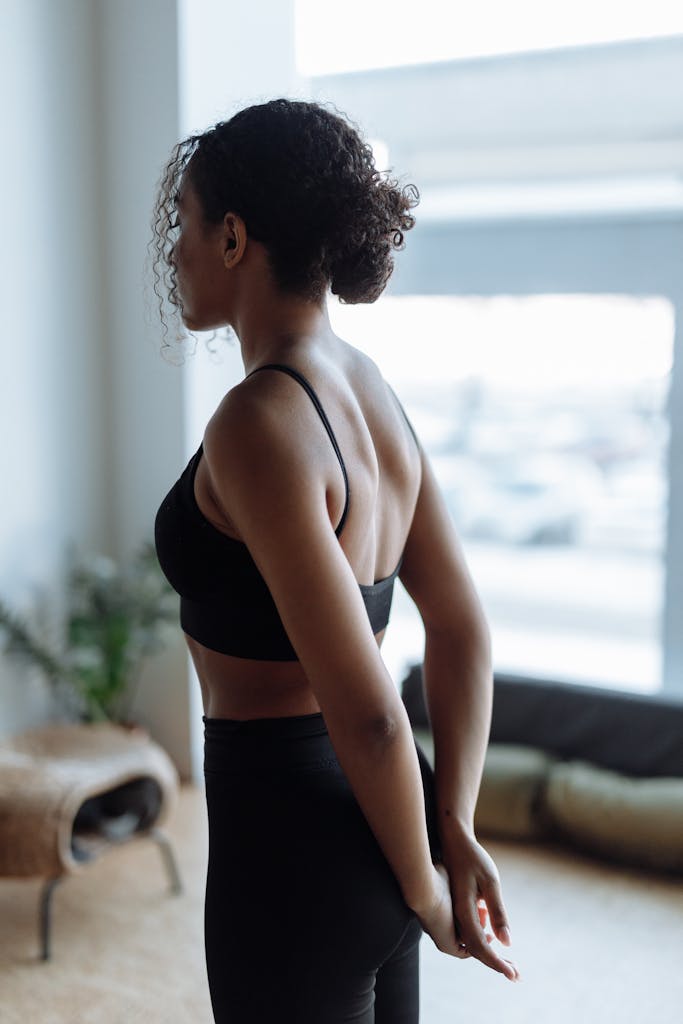
Posture is one of the most immediate ways to influence how you feel. When you slump forward, your chest compresses and your breathing becomes shallow. This can reinforce feelings of low energy and self-doubt. Instead, aim for a neutral, upright posture.
- Lengthen your spine gently
- Keep your head aligned with your shoulders
- Avoid stiffness or overcorrection
This is not about looking rigid. It is about creating space in the body. A more upright posture supports deeper breathing and can increase alertness, both of which contribute to confidence.
2. Open Your Chest and Relax Your Shoulders
Confidence is often reflected in openness. When you feel anxious, your body may instinctively close off. Shoulders round forward. Arms tighten. The chest collapses slightly. You can reverse this pattern. Try this:
- Roll your shoulders up, back, and down
- Allow your chest to open naturally
- Let your arms rest comfortably at your sides
This small adjustment can signal safety to your nervous system. Over time, it can also reduce physical tension associated with anxiety.
3. Make Gentle Eye Contact
Eye contact can feel uncomfortable, especially in moments of self-doubt. However, avoiding it can reinforce feelings of insecurity. Instead, aim for gentle and natural eye contact.
- Look at the person you are speaking to for a few seconds at a time
- Break eye contact occasionally to keep it natural
- Avoid staring or forcing it
Eye contact helps create connection. It also sends a subtle message to your brain: “I can handle this interaction.” Research suggests that eye contact plays a role in social confidence and emotional regulation (Kleinke, updated research supports its role in social behaviour).
4. Slow Down Your Movements
When you feel nervous, your movements may become quick or restless. You might fidget, shift your weight, or rush through actions. Slowing down can have a powerful effect. Try to:
- move deliberately rather than quickly
- pause briefly before speaking
- allow your gestures to be natural and unhurried
Slower movements communicate calmness. They also give your mind time to catch up with your actions. This can reduce internal pressure and create a sense of control.
5. Use Your Breath to Anchor Your Body
Breathing is closely linked to body language. When you feel anxious, your breathing often becomes shallow and rapid. This reinforces the stress response. Instead, focus on slow, steady breathing.
- inhale through your nose for four seconds
- exhale slowly for six seconds
Longer exhales activate the body’s relaxation response. Research shows that controlled breathing can reduce physiological arousal and support emotional regulation (Zaccaro et al., 2018). As your breathing slows, your posture often follows. And with it, your sense of confidence.
How These Small Changes Add Up
Each of these techniques may seem simple on its own. But together, they create a noticeable shift.
- your body feels more grounded
- your breathing becomes steadier
- your movements feel more intentional
These changes send consistent signals to the brain. Signals of safety, control and capability. Over time, this can influence not only how you feel in the moment, but also how you approach future situations.
Common Misconceptions About Confidence and Body Language
It is important to approach this topic realistically. Body language is not a quick fix for deep-seated anxiety or low self-esteem. It does not replace psychological work. However, it can support it. Another misconception is that confidence requires exaggerated or dominant body language. In reality, subtlety is more effective. Confidence often looks calm, grounded, and natural. Not forced or performative.
When to Use These Techniques
These strategies can be used in everyday situations, such as:
- before a meeting or presentation
- during social interactions
- when you notice self-doubt rising
- when transitioning between tasks
They are especially helpful in moments where confidence feels low. Even a small adjustment can interrupt negative patterns.
The Role of Body Language in Mental Health
Body language is part of a broader approach to mental health. It connects with:
- emotional regulation
- nervous system functioning
- self-perception
Research suggests that combining body-based techniques with cognitive approaches can enhance overall well-being (Price & Hooven, 2018). This highlights an important point: Mental health is not just about thoughts. It is about the whole system—mind and body working together.
Conclusion
Confidence is often seen as something you either have or you do not. But in reality, it is something you can influence. Through small, intentional changes in body language, you can begin to shift how you feel in the moment. You can create more space, more calm and more control. These changes may feel subtle. But they matter. And over time, they can support a stronger, more grounded sense of confidence in both your mind and your body.
References
Cuddy, A. J. C., Schultz, S. J., & Fosse, N. E. (2018). P-curving a more comprehensive body of research on postural feedback reveals clear evidence for effects on feelings of power. Psychological Science, 29(4), 656–666.
Peper, E., Lin, I. M., Harvey, R., & Perez, J. (2017). How posture affects memory recall and mood. Biofeedback, 45(2), 36–41.
Price, C. J., & Hooven, C. (2018). Interoceptive awareness skills for emotion regulation: Theory and approach. Frontiers in Psychology, 9, 798.
Zaccaro, A., Piarulli, A., Laurino, M., Garbella, E., Menicucci, D., Neri, B., & Gemignani, A. (2018). How breath-control can change your life: A systematic review on psychophysiological correlates of slow breathing. Frontiers in Human Neuroscience, 12, 353.
Körner, A., & Schütz, A. (2018). Power poses revisited: The effect of adopting expansive vs. contractive postures on self-perceptions. Comprehensive Results in Social Psychology, 3(1), 1–37.